Talk Is Cheap, Memory Isn't: I Transcribed My Voice Memos by Hand for Two Weeks
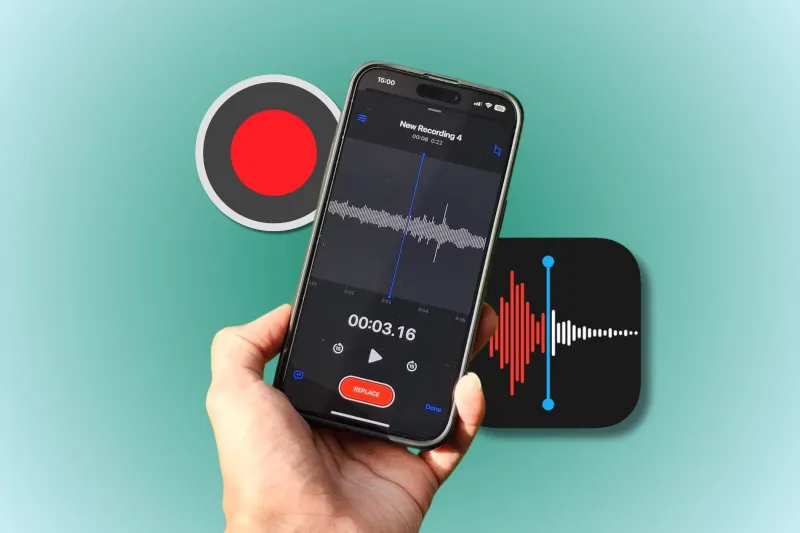
Photo: person recording voice memo on smartphone with headphones, via static1.makeuseofimages.com
I have 214 voice memos on my phone. I've listened to exactly four of them.
That's not an accident. That's the design. Every note-taking app worth its venture funding now wants to record your meetings, transcribe them with AI, and file them away into a searchable archive. Capture is frictionless. Playback is your problem.
I bought into it hard. Boardwalk strolls, grocery store epiphanies, the back half of Zoom calls — all of it recorded, transcribed, tagged, and promptly forgotten. My voice notes weren't a second brain. They were a mausoleum with good search.
So for two weeks, I tried something almost embarrassingly analog: I recorded voice memos as usual, but I transcribed every single one by hand. No AI. No auto-magic. Just me, typing out my own thoughts like a court stenographer with a caffeine habit.
The First Thing I Learned: My Voice Notes Are Mostly Garbage
Day one was humbling. I transcribed a three-minute memo I'd recorded about "an idea for the podcast." The transcript was 480 words. The actual idea was one sentence, and honestly, it wasn't a great sentence.
Hand-transcribing forces you to hear yourself the way other people hear you. The filler words. The way I say "obviously" when nothing is obvious. The way a thought that felt profound in the moment sounds, once typed out, like something a fortune cookie rejected.
But that's exactly the point. Transcription is a filter. When you have to physically reproduce every word, you start editing in real time — both on the recording and in your head. By day four, my voice memos were getting shorter and sharper, because some part of my brain knew it would be the one typing them later.
The Research Side of Things
I wanted to know if my experience tracked with anything, so I dug into the productivity research — and, full disclosure, I'm a writer, not a scientist, so take this as informed reading rather than a peer review.
The core finding that keeps showing up is the generation effect: we remember things we produce, not things we consume. It's the same reason handwriting notes beats highlighting a textbook. The effort is the point. Effort is the encoding.
AI transcription removes all of it. You speak, a server in Virginia does the work, and your brain is a passenger the whole way. You end up with a perfect record of something you never actually processed.
There's a related phenomenon I've started calling audio hoarding. Capture feels like progress. Recording a meeting feels like dealing with a meeting. But a transcript you never revisit isn't a memory aid — it's a guilt object. It sits in your app taking up space and, worse, taking up the mental real estate of "someday I'll go through that."
The Numbers From My Own Little Experiment
Here's what two weeks of hand transcription actually looked like:
- Memos recorded: 31 (down from my usual ~40, and I think that's telling)
- Total transcription time: about 3.5 hours
- Memos I actually revisited afterward: 19 — versus roughly zero in the prior two months
- Ideas worth keeping: 6, which is five more than my usual hit rate
That last ratio is the story. When reviewing my old auto-transcribed archive felt like homework, I never did it. When my archive was small, hand-typed, and already edited by the act of transcription, rereading took minutes and actually sparked follow-up thinking.
You Don't Have to Go Full Monk Mode
Look, I'm not saying burn your transcription software. Meeting transcripts are genuinely useful — searching "who said the Q3 deadline moved" beats replaying 45 minutes of audio. For record-keeping, AI transcription is a gift.
The problem is using capture-as-a-service for thinking. Thoughts need friction. So here's the compromise system I've settled on:
- Meetings get auto-transcribed. That's a record, not a reflection.
- Personal ideas get hand-transcribed within 24 hours. If a thought isn't worth ten minutes of typing, it probably wasn't worth having.
- The recording gets deleted after transcription. No exceptions. The transcript is the artifact.
- Weekly review, fifteen minutes, no new capture. Just reading what past-me wrote.
Rule three felt wasteful at first. Then I realized I was keeping audio the way people keep newspaper clippings from 2009 — not because I'd use it, but because deleting felt like admitting the capture was pointless. Sometimes it was. That's okay. The capture did its job in the moment; it clarified the thought enough to know it didn't matter.
The Uncomfortable Takeaway
Effortless capture promised us a perfect memory. What it actually delivered was a perfect archive of an unexamined life. Notes aren't valuable because they're complete. They're valuable because someone decided they were worth writing down.
Sometimes that someone should have to do a little work.