Six Years of Dust: I Dug Up Every Meeting Note I Forgot I Took (and Counted the Bodies)

Photo: old worn notebooks stacked on wooden desk with coffee cup, moody lighting, via thumbs.dreamstime.com
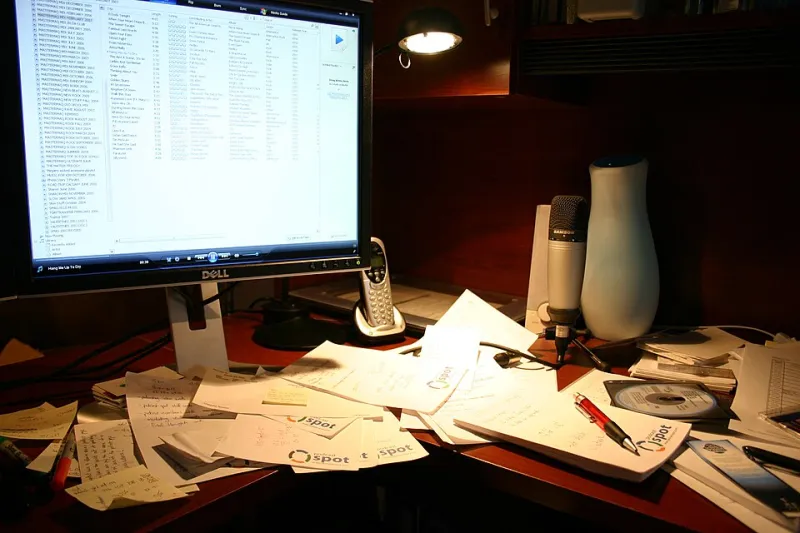
There's a notebook in my desk drawer from March 2019. I know because I dated the first page, back when I was optimistic enough to believe I'd actually fill the thing. It took me four years to abandon it. Last weekend, in a fit of Sunday-afternoon procrastination, I decided to do what any reasonable person would do: I excavated everything. Every old notebook, every abandoned note app folder, every voice memo I never transcribed. Six years of my own digital archaeology, shovel in hand.
What I found was humbling. And honestly? It changed how I take notes going forward.
The Site Survey: What Was Actually Buried Down There
First, the raw numbers. Across two paper notebooks, three note apps (RIP, two of them), and a cloud archive I forgot I was paying for, I cataloged 1,847 individual notes. Then I sorted them into four buckets:
- Actionable at the time — meeting notes, to-dos, project plans: 38%
- Reference material — logins, wifi passwords, HR policy snippets: 11%
- Half-thoughts — single sentences, app ideas, "ask Dave about the thing": 34%
- Full mystery — no date, no context, no idea what "Q3 hedgehog plan" meant: 17%
That last category kept me up at night. Seventeen percent of everything I'd written down was genuinely incomprehensible to me, the person who wrote it. Not lost to time — lost to bad note-taking in the moment.
The Great Extinction Event
Here's the pattern that emerged: nearly everything from 2019 and 2020 was dead. Not archived-dead — useless-dead. Meeting notes from weekly standups that no longer exist. Action items for projects that shipped (or didn't) years ago. An entire page dedicated to comparing the pros and cons of different standing desks. I bought the desk. The note outlived its purpose by four years.
The survival rate was brutal. Of 1,847 notes, I'd estimate fewer than 60 still had any value today. That's about 3%. Three percent!
But before you conclude that note-taking is a scam, look at what did survive:
- Meeting notes where I'd written down who said what, not just what was decided. Those became surprisingly valuable when a "wait, whose idea was this?" question surfaced last year.
- Decisions with reasoning attached. "We're going with vendor B because vendor A can't do SSO" aged beautifully.
- Numbers. Budgets, metrics, quotes. Data outlived everything else.
- A handful of half-thoughts that turned out to be seeds. One 2021 note — literally the phrase "what if onboarding was a checklist the new hire owns?" — became a process my team still uses.
The Excavation Framework
So what do you do with your own archive? I developed a three-pass system you can run in a single afternoon:
Pass one: the date triage. Anything older than two years gets one question: is this still true? If a note describes a situation that no longer exists, delete it. Don't archive it — that's just moving the hoard. Old meeting notes about dead projects are not memories; they're clutter with a timestamp.
Pass two: the context test. For anything you keep, ask: could I explain this note to a coworker in one sentence? If not, either add that sentence now or let it go. My 17% mystery pile taught me that a note without context is worse than no note — it consumes future-you's attention for zero return.
Pass three: the seed sort. This is where the gold is. Half-thoughts and ideas get pulled out of the meeting-note graveyard and moved into one short "seeds" note — a running list, no organization required. Mine is 22 lines long and more valuable than the other 1,800 notes combined.
What I Write Down Now
The excavation rewired my note-taking habits in real time. My rules now:
- Capture decisions and their reasons, not transcripts. Nobody needs the meeting summarized back to them; they need to know what was decided and why.
- Every note gets a subject line that a stranger could read. "Q3 hedgehog plan" fails this test. "Vendor comparison for Q3 analytics tool — picked DataDog over New Relic because of SSO" passes.
- Numbers get dates. A budget figure without a date is a future lie.
- Ideas go to the seed list the same day. Meeting notes are for meetings. Ideas need their own home or they die in the rubble.
- Delete something every time you open the archive. It's flossing for your note system.
The Verdict From the Trenches
Six years of notes yielded about 60 useful items and one genuinely valuable habit change. If that sounds like a bad return, consider the alternative: I'd have kept paying for storage on 1,800 pieces of dust, and the 60 good ones would've stayed buried anyway.
The real lesson isn't "take fewer notes." It's that notes aren't a library — they're a landfill with occasional treasure, and landfills need to be managed. Dig into yours once, learn what your own garbage looks like, and you'll never write "ask Dave about the thing" without context again.
Sorry, Dave. Whatever it was, it's gone now.