The February Problem: Why Your Elaborate Note System Falls Apart Before Spring
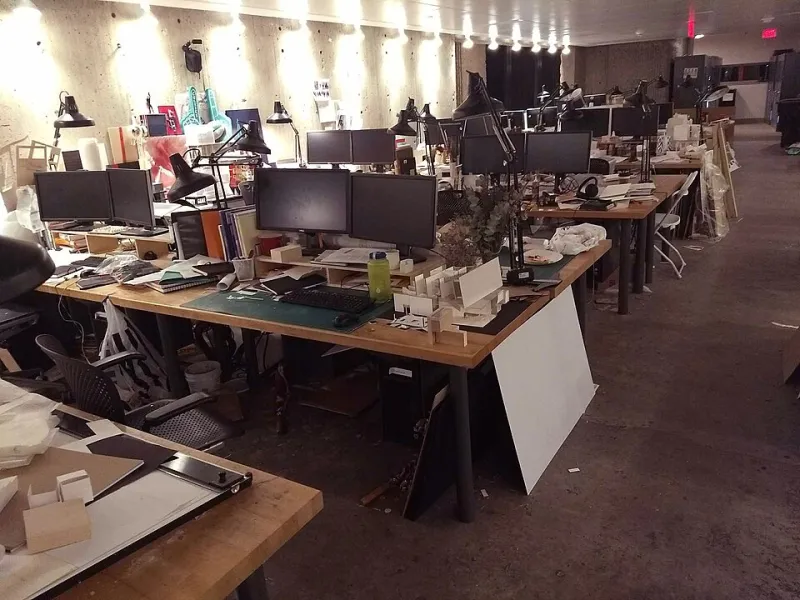
Photo: RukshanV, CC BY-SA 4.0, via Wikimedia Commons
Every January, the same ritual plays out across the country. A productivity YouTube video goes viral. Someone discovers the Zettelkasten method, or PARA, or a 47-tag taxonomy with hierarchical prefixes. They spend an entire weekend migrating notes, building dashboards, color-coding databases in Notion.
By the second week of February, the system is dead.
The notes are still there — that's the tragedy of digital storage, nothing ever gets deleted. But nobody's in there anymore. The dashboard is stale, the tags have drifted, and the last entry is a half-finished thought from January 29th titled "ideas for weekly review process (WIP)."
If this sounds painfully familiar, I have good news and bad news. The bad news: it's not your fault. The good news: the fix is to do dramatically less.
Systems Fail Because They're Built for the Person You Wish You Were
Here's the uncomfortable truth about elaborate organization systems: they're optimized for a version of you that doesn't exist. Weekend You — caffeinated, ambitious, with four uninterrupted hours — designs a system for Weekday You, who has 90 seconds between meetings and a toddler yelling in the background.
Every extra step you add — tagging, linking, categorizing, reviewing — is a toll you pay every single time you capture or retrieve a note. Elaborate systems stack tolls. And human beings, being human, stop paying tolls.
There's a well-worn observation in software development that applies here: people abandon tools when the maintenance cost exceeds the value delivered. Your note system is software. You are its only user. And you've quietly stopped renewing your subscription.
The Retrieval Problem Nobody Talks About
Most productivity content obsesses over input: how to capture, how to catalog, how to connect. Almost nobody talks about retrieval — the moment three months later when you actually need that note.
Ask yourself: when was the last time you found something in your second brain? Not filed something. Found something.
In our mail and comment sections, the pattern is remarkably consistent. Readers with the most sophisticated systems report the worst retrieval rates. One reader told us she spent 45 minutes searching her own knowledge base for a note she knew she'd written — then found the answer in thirty seconds on Google. Another admitted his Obsidian vault has 4,000 notes and he's opened maybe two dozen of them more than once.
The dirty secret of the second brain movement is that most notes are never read again. They're written, filed, and entombed. A system built around that reality looks very different from one built around the fantasy of the "evergreen" knowledge garden.
The Minimum Viable System
So here's the contrarian pitch: build the dumbest system that works. We call it the minimum viable system, and it has exactly three rules.
Rule 1: Optimize for search, not structure. Stop building hierarchies. Modern apps search everything — full text, OCR'd handwriting, even images. If you can name a note well, you don't need to file it well. A good title beats a good tag nine times out of ten.
Rule 2: One capture bucket, no triage. Everything goes to one place: an inbox note, a daily log, a single folder. No deciding where something "belongs" at capture time. Sorting is a tax on future you, and future you can usually just search instead.
Rule 3: Write for the skim, not the archive. When you take a note, assume you'll read it exactly once more — in a hurry, six months from now. Put the conclusion in the first line. Include the source. Write a sentence about why you saved it. Notes written for archival beauty are useless; notes written for a desperate future skim are gold.
That's it. No weekly reviews unless you genuinely enjoy them. No tags unless search fails you — and add them then, reactively, when you know what you'd actually search for.
Boring Is a Feature
The best organizational system isn't the one that would impress a productivity YouTuber. It's the one you'll still be using in November. Boring systems survive February because they don't ask for anything — no maintenance ritual, no taxonomy upkeep, no guilt.
Your second brain doesn't need to be a cathedral. A well-labeled shoebox you can actually reach into beats a locked library every time.
Clean out your elaborate setup if you must. But this year, try the minimum viable system. Future you — the one frantically searching at 11 PM before a deadline — will be grateful.