In Defense of the Legal Pad: What App Designers Keep Getting Wrong About Sticky Notes
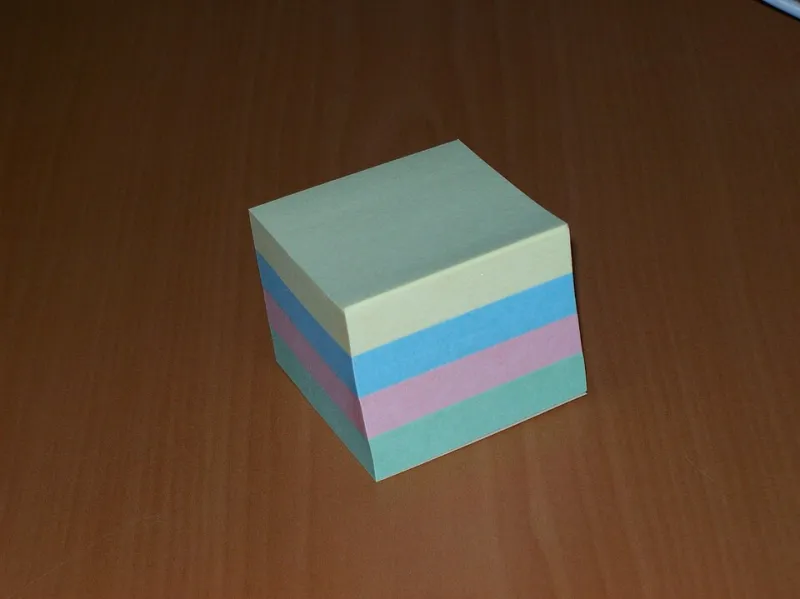
Photo: J.P. C., CC BY-SA 2.0, via Wikimedia Commons
There's a sticky note on my monitor right now that says "CALL DENTIST." It's been there since March. I have a reminder app, a to-do app, and a calendar that pings me at every opportunity. The dentist note is still winning.
If you work in an American office in 2025, you know exactly what I'm talking about. We have more productivity software than any generation in history, and yet the whiteboard down the hall is still the real project management system. The legal pad is still where the actual decisions happen. The sticky note is still the last line of defense between a task and oblivion.
We've written a lot on NotePod about going digital. But this week, I want to make the opposite argument — or at least part of one. Because the stubborn survival of analog habits isn't a failure of technology. It's a design brief we keep ignoring.
The Hybrid Habit Is the Norm, Not the Exception
For this piece, I informally polled a few dozen workers across industries — teachers, nurses, project managers, a guy who runs a HVAC company in Ohio — about their digital/analog split. The pattern was striking. Almost nobody is fully analog or fully digital. Nearly everyone is running a hybrid system, whether they've named it or not.
A project manager in Denver told me her team's sprint planning happens in a fancy workspace app, but "the real backlog" is a whiteboard photo she takes every Friday. A paralegal in Atlanta keeps case-critical phone numbers on a sticky note inside her desk drawer because "the cloud has never once been down when I needed a phone number."
These aren't Luddites. They're people who've stress-tested both systems and quietly settled into whatever actually works under pressure.
What Sticky Notes Do That Apps Don't
Strip away the nostalgia, and analog tools have three genuine superpowers that app designers still struggle to replicate.
Zero boot time. A sticky note is captured in under two seconds. No unlock, no app switch, no "which notebook was that in?" The friction cost of writing something down is effectively zero, which means the capture rate is effectively 100%.
Physical persistence. A sticky note on your monitor is an interruption you can't swipe away. It occupies your visual field until it's dealt with. Digital notifications compete with forty other pings; the yellow square just... sits there, radiating guilt, until you act.
Social legibility. A whiteboard is a shared object. Anyone walking past can see the state of the project. There's no permission, no login, no "can you send me access to that board?" The information is just there, in the room, doing its job.
That last one is the big one. So much of our digital tooling optimizes for private, personal, searchable knowledge — and then we wonder why teams feel out of sync.
The Rituals Worth Keeping
Not all analog habits earn their keep. Here's my honest scorecard after years of watching my own hybrid system evolve:
Keep it analog: Brainstorming and early thinking. The whiteboard's messiness is a feature — it signals "nothing here is final," which keeps ideas loose. Research on handwriting and memory keeps backing this up, too.
Keep it analog: One-line capture. If a thought strikes you mid-conversation, the fastest capture tool that's actually in your hand wins. Sometimes that's your phone. Sometimes it's the pad.
Kill it analog: Anything with a deadline. The dentist note has a failure mode, and it's called "March." Analog storage has no search, no backup, and no reminders. If a task has a date attached, it belongs in something that can nag you.
Kill it analog: Anything you need twice. If you'll ever have to find that note again — meeting details, client specs, that one password policy — sticky notes are where information goes to die. You will retype it, or worse, guess.
The Design Lesson Hiding in the Yellow Square
Here's what I wish every note app designer would internalize: people don't cling to sticky notes because they hate technology. They cling to them because the sticky note nails three things — capture speed, ambient persistence, and shared visibility — that most apps treat as afterthoughts.
The good news is that the best apps are catching on. Widgets that put a one-tap capture button on your home screen. Kanban boards that mimic whiteboard legibility. Shared scratchpad spaces that live permanently on a team's second monitor.
The goal was never to eliminate paper. The goal is to keep the parts of paper that work and fix the parts that don't — the lost notes, the unsearchable scribbles, the March dentist appointment.
So no, I'm not throwing away the legal pad. But that sticky note? It's moving into an app with a reminder attached. Progress doesn't have to be total to count.